

Quick answer
Start with controls: a working room thermostat, correctly set TRVs and a sensible schedule. Then look at the boiler's flow temperature, which is often set far higher than a condensing boiler needs. Add insulation and draught-proofing where practical, keep radiators clear and bled, and maintain the system annually. Savings depend entirely on your home, so treat any guaranteed figure with caution.
Efficiency advice is full of big promises. We would rather be straight with you: the changes below genuinely affect how well your system runs, but the size of any saving depends on your property, your habits and your existing setup. Nobody can honestly guarantee you a percentage.
1. Get the controls right first
A working room thermostat, a sensible schedule and correctly used radiator valves cost nothing and make the biggest practical difference. Heating rooms you are not using, or running the system when the house is empty, undoes every other improvement.
2. Use thermostatic radiator valves properly
TRVs set the target temperature for each room — they are not taps. Setting them lower in bedrooms and hallways and higher in living spaces lets each room settle at a comfortable level instead of every radiator running flat out.
3. Choose a comfortable, not excessive, room temperature
Most households find a comfortable range somewhere between 18°C and 21°C. Every degree costs energy, so it is worth finding the lowest temperature that feels right rather than defaulting to a high number.
4. Look at your boiler's flow temperature
Condensing boilers work most efficiently when return water temperatures are low enough to allow condensing. Many boilers are left on a high default flow temperature for heating, which can prevent that. Lowering it — where the system can still heat the property comfortably — is one of the more effective adjustments available, and it is one your engineer can advise on at a service.
5. Keep radiators working properly
- Bleed radiators with cold tops so the full panel heats
- Keep furniture and long curtains from covering radiators
- Have the system balanced so distant radiators get their share of flow
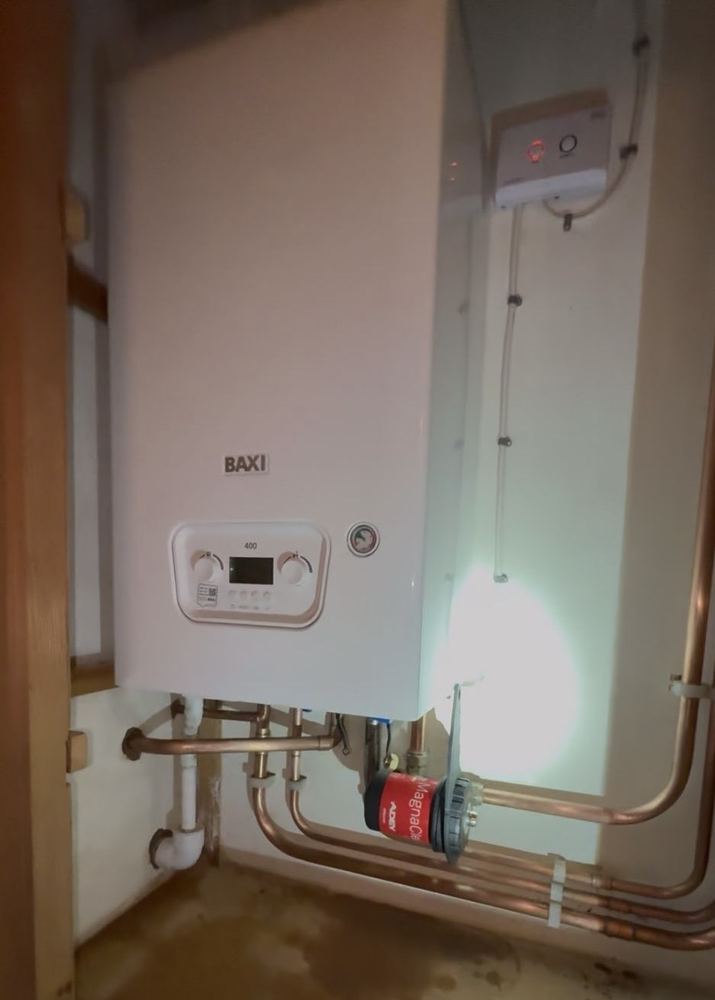
- Fit and clean a magnetic filter to protect the system from magnetite
6. Insulation and draughts
Heat you retain is heat you do not need to generate. Loft insulation, draught-proofing and insulating pipework in unheated spaces support everything else on this list. This is where independent bodies such as the Energy Saving Trust are a genuinely useful source of impartial guidance.
Independent, non-commercial home energy guidance is published by the Energy Saving Trust. Energy Saving Trust
7. Consider smart controls
Smart thermostats and zoning can help where a household's routine is irregular, because they make it easier to heat the right space at the right time. They help most when the underlying system and radiators are set up correctly — they are not a fix for a poorly balanced system.
8. Maintain the system
A boiler running to manufacturer tolerances, with clean system water and a functioning filter, performs as designed. An annual service is what keeps it there.
9. When a replacement is worth considering
If your boiler is old, non-condensing or repeatedly faulty, no amount of control tuning will match a properly specified modern installation with modern controls. That is a bigger decision, and our repair-or-replace guide walks through it honestly.
Considering a more efficient boiler?
Fixed-price installation quotes, correctly sized for your home, with interest-free finance options available on eligible installations.
Get a fixed quoteWhen to call a professional
Safe homeowner checks stop at pressure gauges, radiator valves, controls and visible pipework. Anything involving gas, combustion, the boiler casing, the flue or internal components is work for a Gas Safe registered engineer. If you smell gas, follow the appropriate emergency gas safety guidance and do not attempt to work on the appliance.
Call 07881 963508The Betaflo recommendation
The changes that genuinely affect how efficiently your heating runs, in the order we would tackle them. If you'd like a second opinion before spending money, speak to us first — we'd rather tell you your boiler is fine than sell you something you don't need.
Frequently asked questions
Does turning the boiler flow temperature down save money?
It can help a condensing boiler operate more efficiently, but the effect depends on your home and radiators. Adjust gradually and keep comfort as the test.
Is it cheaper to leave the heating on low all day?
For most homes, heating to a comfortable temperature when needed is more sensible than running constantly, though very cold weather is an exception where a low background setting helps prevent freezing.
Will a new boiler cut my bills?
A modern, correctly sized condensing boiler with good controls generally runs more efficiently than an old appliance, but we will not quote you a guaranteed saving — too much depends on your property and usage.
About the author
Betaflo Heating UK
Betaflo Heating UK is founded and run by Miles Davis and Sam Boyle, Gas Safe registered heating professionals installing, servicing and repairing boilers across Tamworth, Birmingham and the surrounding areas. Our guides are written from the work we do in customers' homes every week. More about Betaflo.
Related heating advice
Radiators & Central Heating
Why Is My Radiator Cold At The Top?
Different cold spots mean different things. This guide matches the symptom to the likely cause instead of assuming every cold radiator needs the same treatment.
Boiler Servicing
Why Should You Service Your Boiler Every Year?
Safety, warranty conditions and early fault detection — what a yearly service genuinely does, and what it can't promise.
Boiler Replacement
Should I Repair Or Replace My Boiler?
A balanced comparison of repair versus replacement, with a decision guide rather than a sales pitch.
Boiler Replacement
How Long Does A Boiler Last?
Why boiler lifespan is a range rather than a number, what shortens it, and the signs that replacement is worth pricing up.