

Quick answer
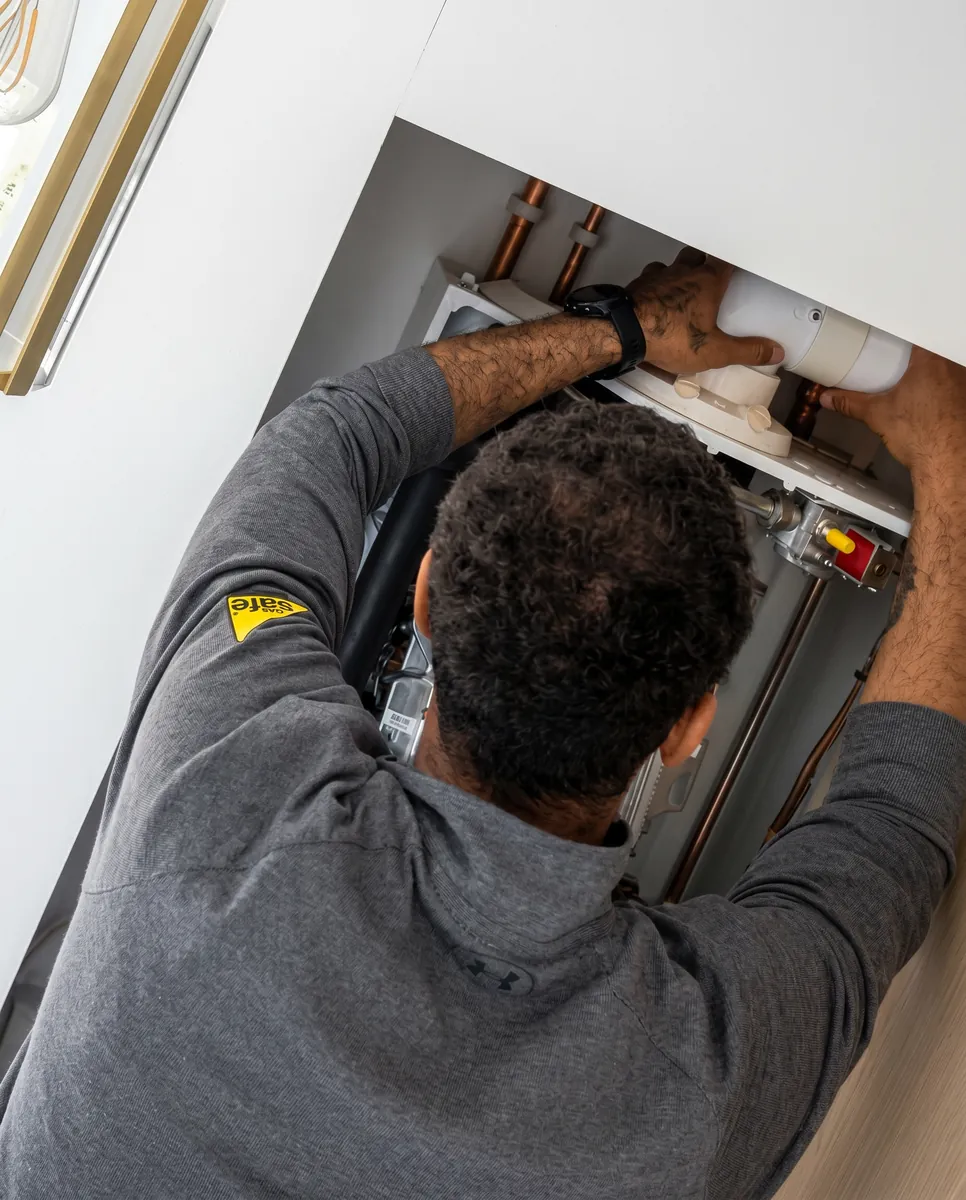
A magnetic filter is fitted onto the heating return pipe and captures magnetite — the black iron oxide sludge that forms inside radiators and pipework — before it reaches the boiler. It protects the pump, valves and heat exchanger, and it needs emptying at every annual service. We fit one as standard on our installations because it is one of the cheapest ways to protect a new boiler.
If you have had a boiler fitted in the last few years there is probably a small canister on the pipework underneath it. That is the system filter, and it does more for the life of your boiler than most of the features on the front panel.
What it actually catches
Steel radiators corrode slowly from the inside, producing magnetite — a fine black iron oxide. Circulated around the system it wears pump bearings, clogs valves and narrows the waterways in modern heat exchangers. A magnetic filter uses a magnet in the flow path to hold that debris until it is drained out.
Why it matters more on modern boilers
- Modern heat exchangers have much narrower waterways than older cast-iron ones
- Sludge causes kettling noise and uneven radiator heating
- Debris shortens pump and diverter valve life
- Several manufacturers require system protection as part of their warranty conditions
It only works if it is emptied
A filter that has never been cleaned is a full filter. Emptying it takes a few minutes and is part of every annual boiler service we carry out. We also check and top up inhibitor at the same time, because the filter and the chemical protection work together.
Filter never been cleaned?
We clean the filter, check inhibitor levels and service the boiler in one visit.
Book a boiler serviceWhen to call a professional
Safe homeowner checks stop at pressure gauges, radiator valves, controls and visible pipework. Anything involving gas, combustion, the boiler casing, the flue or internal components is work for a Gas Safe registered engineer. If you smell gas, follow the appropriate emergency gas safety guidance and do not attempt to work on the appliance.
Call 07881 963508The Betaflo recommendation
How a magnetic system filter protects a boiler, why we fit one on installations, and what happens if it is never cleaned. If you'd like a second opinion before spending money, speak to us first — we'd rather tell you your boiler is fine than sell you something you don't need.
Frequently asked questions
Can a filter be added to an existing system?
Yes. It's fitted on the return pipework near the boiler and is a short job in most homes.
Does a filter replace the need for inhibitor?
No. The filter catches debris; inhibitor slows the corrosion that creates it. You want both.
How often should it be cleaned?
At every annual service as a minimum, and sooner after a system clean or a new installation on an older system.
About the author
Betaflo Heating UK
Betaflo Heating UK is founded and run by Miles Davis and Sam Boyle, Gas Safe registered heating professionals installing, servicing and repairing boilers across Tamworth, Birmingham and the surrounding areas. Our guides are written from the work we do in customers' homes every week. More about Betaflo.
Related heating advice
Radiators & Central Heating
Do I Need A Power Flush?
An honest look at power flushing — the symptoms that justify it, the alternatives, and when it is being oversold.
Boiler Servicing
Why Should You Service Your Boiler Every Year?
Safety, warranty conditions and early fault detection — what a yearly service genuinely does, and what it can't promise.
Boiler Servicing
How Often Should A Boiler Be Serviced?
Annual servicing is the standard recommendation — here is where that comes from, and where landlord obligations differ from homeowner guidance.
Boiler Problems
Why Is My Boiler Making A Strange Noise?
A guide to the noises boilers and heating systems make, what they can point towards, and which ones should not be ignored.